Ever since we were little kids, some of us had these big dreams to help, serve, and protect those around us. Whether we put on white jackets and played doctor, or put on our parent’s heavy boots to put out fires like firefighters, our ultimate purpose was to help save someone. Playing these games as kids, our goal was to save anyone that was in danger of getting hurt because that’s what Public Service professionals do. They save everyone, regardless of their gender, race, religion, orientation. . .
Racism kills. Sexual Prejudice kills. Transphobia kills. Islamophobia, Xenophobia, Anti-Semitism kills. Psychophobia kills. People of different races, from different cultures, members of the LGBTQ+ community, disabled people, and so on already endure a disgusting amount of hate and discrimination for being different than the abuser, attacker, or instigator. To say that all public service commanders can be a safe space of protection for these groups would simply be false. An alarming number of public service professionals chose to deny, refuse, and neglect service to people of color, people of varying sexual orientations, from different cultures, from different backgrounds, from different areas in life. And that’s terrifying.
To dedicate yourself as someone who serves the public, your duty to serve is to serve all. I have seen debates on social media discussing how doctors, firefighters, police officers, and so on “feel” about treating, protecting, and helping people who conflict with their moral beliefs or opinions. To those who question whether or not they’d help a human being because of something like race, or sexual orientation, you have no place in that profession. That dedication to society deserves to be unconditional. Service to humans should come without conflict.
In a report done by the Society for Institutional and Organizational Economic, school districts have denied or refused about 27% of quires from “black-sounding” names. In a Sherriff’s office, about 54% of those who called with “black-sounding” names failed to get a response. In 2014, the ACLU of Illinois and Central Austin Neighborhood Association filed a lawsuit against Chicago’s scheme for police deployment after concluding in a study that police was over-deployed in predominantly white neighborhoods, while Black and Latino communities in the city had inadequate protection. Along with that, dispatching after 911 to white neighborhoods was much quicker than dispatching to Black and Latino communities. Police brutality? The ultimate description of “racism kills.” Black boys are being shot for non-threatening offenses, disrespected for the color of their skin while masking their death as a “mistake” by law enforcement. Hate cannot be masked by so called, “mistakes” and no amount of justice can bring these innocent lives back.
Thirteen states in this country have implemented laws that allow providers to deny services to sexual minorities and those who identify with a sexual orientation other than “heterosexual.” A 2016 law in North Carolina forbids cities and counties from passing non-discrimination clauses on the basis of sexual orientation or gender identity. LaLa Zannell, a black trans woman from Detroit, had to turn to sex work—which is an unregulated, dangerous profession—because jobs would continue to deny her, and she had very limited options to keep herself alive. Her profession, because of discrimination in the work force, nearly got her killed. Trans women of color are one of the most vulnerable groups likely to be killed, assaulted, or abused because of their identities. Nearly 1 in 5 hate crimes are motivated by anti-LGBTQ+ bias.
Bias Motivation Categories for Victims of Single-bias Incidents in 2018
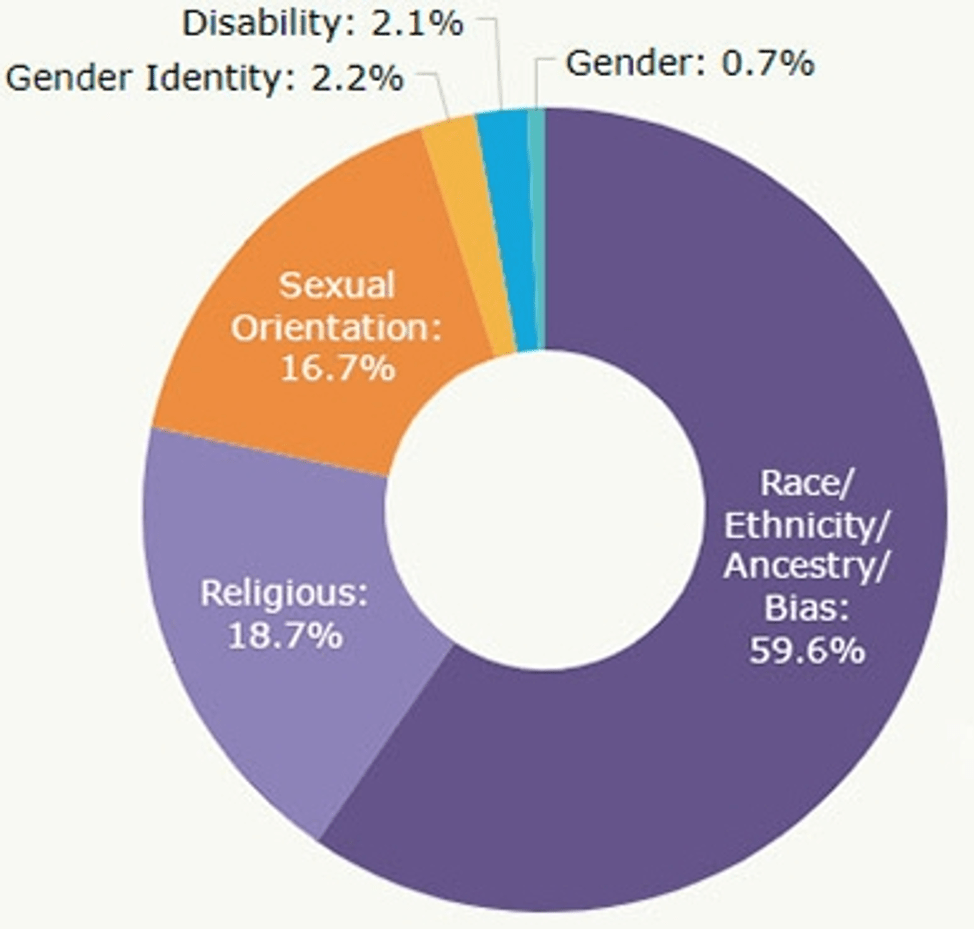
A report released by the FBI above shows bias motivation for all hate crimes reported in the year 2018. Hate surrounds us. It haunts us. It hurts us. Even if we don’t experience it personally, we see people we love, we care about, we look up to being dragged and broken down every single day.
To be a Civil Service member means to protect, serve, and treat everyone. Whether you work in a school, a hospital, in social work, as a firefighter or police officer, there is a predetermined promise to be present for all human beings. Many of these occupations, if not prohibited or conflicted with the law of the state, require these professionals to acknowledge their duty to serve all, regardless of race, religion, sexual orientation, gender identity, and so forth. But are there still people who break this code because they can’t put their own beliefs aside for the wellness of a human being? Yes. To those who serve without hate in their heart, who acknowledge their duties to society without hesitation, they’re seen, but they’re not extraordinary. They’re not “special.” If anything, they’re ordinary. Treating, protecting, serving people as human beings, rather than categorizing them should not be this bizarre and exceptional act. Being humane, moral, and respectful should be a given.
As a white woman, I recognize, acknowledge, and notice the privileges that society has painted for me. I do not deny white privilege, nor do I argue its impact on groups of people who do not reap the benefits of this man-made division. Dividing society into little pieces to express superiority has been a practice and “ritual” for as long as time. As a whole, society should use this privilege to fight for people who don’t have a voice. For people who don’t have this power, this privilege. Fight beside them. Stop finding excuses. Stop creating a rift that makes struggle a competition. Eliminating hate and hate crimes is no easy feat. To say it is a battle to be fought would be an understatement. It has been a world war like no other for centuries. As far as we’ve come as a society, we have so much farther to go. So much more acceptance to preach. A human being deserves to be treated as such, not be labeled and have their worth questioned based on differences.
 Mel's Vision